- The Fascination With Optical Illusions
- The Sailor and the Hidden Wife
- Why the Wife Is So Hard to Spot
- Why Optical Illusions Go Viral
- Another Classic: The Frog and the Horse
- Tips for Finding Hidden Figures
- The Psychology Behind the Illusion
- Why We Love Hidden Figures
- A Perfect Fit for Social Media
- Art Meets Science
- Final Thoughts: A Lesson in Perception
The Fascination With Optical Illusions
Optical illusions have captivated humans for centuries. They engage the brain in ways that feel both playful and perplexing, forcing us to question what we see and how perception shapes reality.
Among the most intriguing are illusions that hide figures within natural scenes or subtly blend human elements into everyday backgrounds. These images don’t just test eyesight — they challenge patience, attention to detail, and mental flexibility.
In recent years, a new wave of optical illusions has taken the internet by storm. Shared widely across social media, these images reward viewers who slow down, look closely, and rethink what seems obvious at first glance.
One illusion in particular — a seemingly simple sailor scene — has gone viral for its clever design and its deceptively difficult challenge: spotting a hidden figure that most people miss entirely.
The Sailor and the Hidden Wife
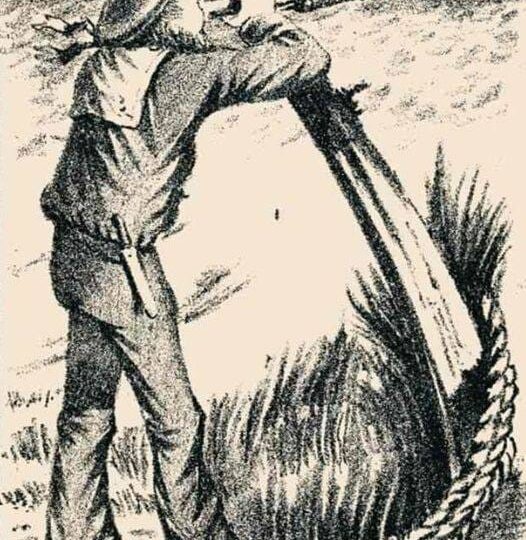
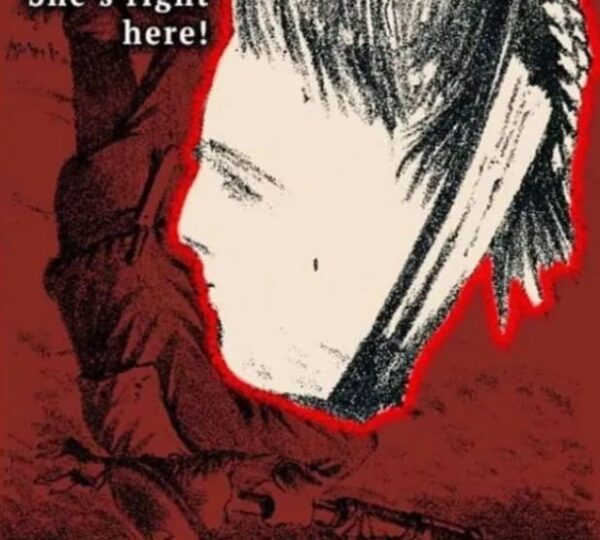
At first glance, the image appears straightforward. A young sailor stands on the shoreline, holding a telescope as he gazes toward the distant horizon. Gentle waves lap at the shore, creating a calm, timeless maritime scene.
But this is no ordinary illustration.
Hidden within the composition is the sailor’s wife — seamlessly camouflaged into the scene in a way that defies immediate recognition. The illusion isn’t about trickery alone; it’s about how the human brain processes visual information.
Our minds are naturally wired to recognize faces quickly, even in imperfect or partial forms. This tendency, known as pareidolia, explains why we often see faces in clouds, shadows, or tree bark. Yet in this illusion, the wife’s face is concealed so subtly that the brain struggles to separate it from surrounding shapes and shadows.
Why the Wife Is So Hard to Spot
The hidden figure is positioned between the sailor’s legs and the telescope stand, with her features blended into the background lines and textures. To most viewers, these elements register as objects — not as parts of a face.
This illusion exploits the brain’s reliance on top-down and bottom-up processing:
-
Bottom-up processing focuses on raw visual data like lines, colors, and contrast.
-
Top-down processing relies on expectations — what we think should be in the image.
Because viewers expect to see a sailor and a telescope, the brain prioritizes those elements and filters out subtle cues that don’t match the dominant narrative.
Reportedly, only about 1% of viewers identify the wife without hints. For those who do, the reward is not just recognition but an appreciation of the illusion’s craftsmanship.
Why Optical Illusions Go Viral
Illusions like this resonate online because they combine challenge, storytelling, and social interaction.
People love puzzles that seem impossible at first. Solving them triggers a dopamine response — the same chemical linked to pleasure and achievement — making the experience deeply satisfying.
There’s also a deeper psychological appeal. Humans are naturally driven to search for patterns and hidden meaning, whether in nature, relationships, or abstract imagery. Optical illusions mirror this instinct, encouraging us to question assumptions and sharpen our observational skills.
Another Classic: The Frog and the Horse
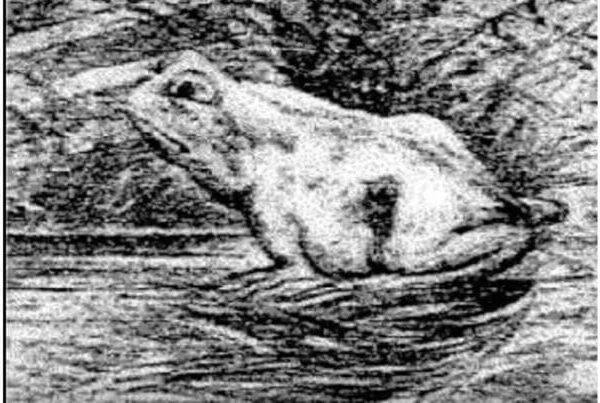
The sailor illusion isn’t alone. Another viral image features a tranquil nature scene that conceals both a frog and a horse within the same composition.
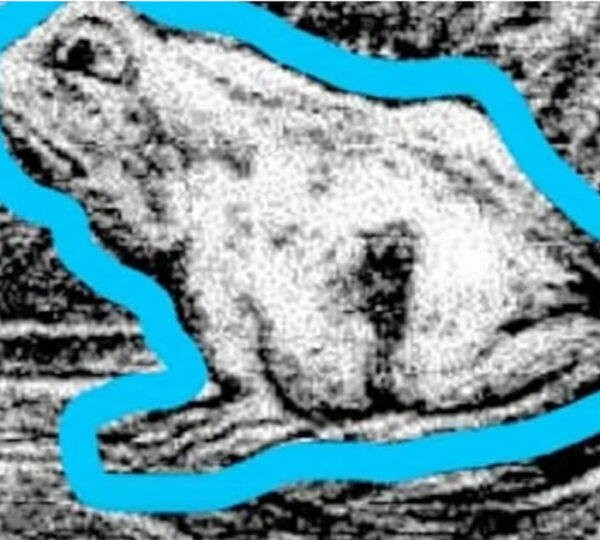
Most viewers immediately spot the frog, whose familiar shape dominates the image. But the horse is hidden almost entirely within the frog’s body and surrounding textures. Only the head and neck are visible — and only if the viewer reinterprets the image with fresh eyes.
Recognizing both animals requires cognitive flexibility — the ability to abandon an initial interpretation and adopt a new one. Once the horse is seen, it’s impossible to “unsee,” highlighting how selectively the brain filters visual information.
Tips for Finding Hidden Figures
If these illusions leave you frustrated, a few simple techniques can help:
-
Change perspective: Tilt your head, zoom in or out, or view the image on a different screen.
-
Study textures rather than obvious shapes — hidden figures often mimic their surroundings.
-
Relax your gaze and use peripheral vision instead of staring at one spot.
-
Divide the image into sections and examine each area individually.
Often, the hidden figure appears when you stop forcing yourself to see it.
The Psychology Behind the Illusion
Optical illusions reveal a fundamental truth: the brain does not passively record reality. Instead, it actively interprets sensory information using shortcuts based on experience and expectation.
Key brain regions involved include:
-
The visual cortex, which processes shapes, color, and motion.
-
The fusiform face area, responsible for facial recognition.
Illusion artists skillfully manipulate these systems, guiding viewers toward one interpretation while concealing another. The result is a striking reminder that perception is subjective — and often incomplete.
Why We Love Hidden Figures
Hidden-figure illusions appeal across cultures and age groups because they:
-
Spark curiosity and problem-solving
-
Reward patience and persistence
-
Encourage social sharing and discussion
-
Create a sense of achievement
They’re even used in education, therapy, and cognitive training to improve attention, visual processing, and flexible thinking.
A Perfect Fit for Social Media
Platforms like TikTok, Reddit, and Instagram have amplified the popularity of optical illusions. Users challenge friends, share hints, and debate what they see, turning a solitary puzzle into a communal experience.
Interestingly, the harder the illusion, the more likely it is to go viral. Confusion, frustration, and triumph all fuel engagement — and keep the image circulating.
Art Meets Science
The most successful illusions blend artistic creativity with scientific insight. Subtle choices in shading, contrast, and line placement determine whether a hidden figure remains invisible or suddenly emerges.
In the sailor illusion, the wife’s face is fragmented by clothing folds, shadows, and object outlines. In the frog-horse image, texture alignment disguises the second animal almost perfectly.
These images sit at the crossroads of art, biology, and psychology, revealing just how constructed our visual reality truly is.
Final Thoughts: A Lesson in Perception
Whether it’s a sailor hiding his wife or a frog concealing a horse, optical illusions offer more than entertainment. They teach us that:
-
First impressions are often incomplete
-
Patience reveals what haste conceals
-
The brain favors efficiency over accuracy
-
Perspective can change everything
For those who spot the hidden figures, there’s a unique satisfaction in seeing what others miss. For those still searching, the challenge itself sharpens perception and curiosity.
In the end, optical illusions celebrate the complexity of the human mind, the brilliance of visual design, and the joy of discovery.
So the next time an image looks simple at first glance, pause — there may be more hiding beneath the surface than you expect.