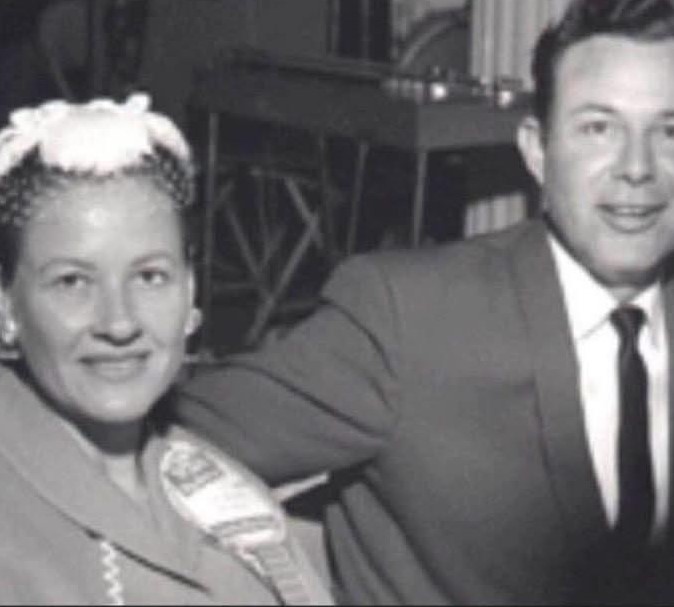
Jim Reeves recorded a song in 1960 that would subtly but irrevocably alter the course of popular and country music.
The song was called “He’ll Have to Go,” and although it didn’t use any shocking techniques or ostentatious production, listeners were profoundly moved by its emotional impact, grace, and restraint.
It evolved into more than just a successful album over time; it became a turning point in the history of American music.
“He’ll Have to Go” transcended boundaries at a period when country music was still largely seen as regional and traditional.
Pop fans who had never connected with the music before found it appealing in addition to country audiences.
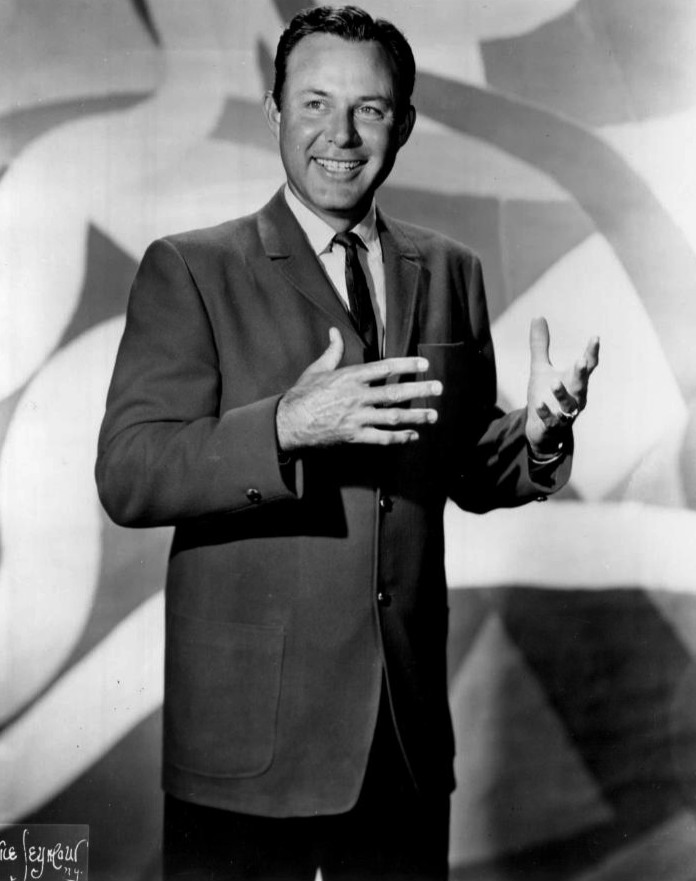
The popularity of the song demonstrated that country music could remain authentic while being elegant, emotionally nuanced, and universally relevant.
The key to that success was Jim Reeves’ voice. In contrast to the coarser vocal styles that dominated country music in previous decades, his baritone was warm, smooth, and controlled.
Rather than using force, he sang with restraint, allowing emotion to flow organically rather than forcing it. This strategy gives “He’ll Have to Go” a timeless quality that endures over 60 years later.
The Voice’s Man
Jim Reeves, popularly known as “Gentleman Jim,” did not become famous by chance. He was born James Travis Reeves in Galloway, Texas, on August 20, 1923, and was raised in a household that valued duty and discipline in addition to music.
Prior to dedicating himself entirely to a career in music, Reeves worked as a disc jockey and radio announcer, which influenced his polished speaking style and fluid delivery.
He learned timing, tone, and clarity from his time behind the microphone—skills that would eventually come to define his vocal style.
Reeves recognized the potential of understatement, in contrast to many artists who depended on loudness or dramatic inflection. He understood when to back off, when to stop, and how to give meaning to stillness.
Jim Reeves was already well-known in the country music industry by the late 1950s. He had developed a devoted following and charted multiple hits.
However, he still lacked the kind of crossover success that would establish him as a household name outside of the genre. With the release of “He’ll Have to Go,” everything changed.

The Song’s Odd Source of Inspiration
Just as unforgettable as the song “He’ll Have to Go” are its beginnings. Joe and Audrey Allison, a successful couple in the country music industry, wrote the song together.
A real-life incident that Joe Allison saw in a bar served as the inspiration.
A man was talking quickly to someone on the other end of the phone, and he heard one half of the conversation.
To improve his ability to hear her, the man kept asking the woman to get closer to the phone. His voice conveyed a sense of emotional vulnerability, desire, and desperation. The song was inspired by that straightforward, private experience.
The listener is immediately transported to a private emotional world by the first phrase, “Put your sweet lips a little closer to the phone.”
There is neither a spectacular opening nor a complex narrative. Instead, a very intimate plea that feels sincere and vulnerable is witnessed by the listener.
The song’s strength was its simplicity. It didn’t rely on lofty statements or intricate metaphors.
The awareness that love is evaporating and that one last effort may be the last opportunity to cling on was the sole emotional moment it centered on.
Making a Classic Recording
Jim Reeves was careful and restrained when he recorded “He’ll Have to Go.” One of the most important producers in the history of country music, Chet Atkins, oversaw the production.
Atkins played a significant role in creating the Nashville Sound, a sound that was intended to make country music more approachable for a wider audience.
Subtle orchestration and soft instrumentation were used in place of fiddles and honky-tonk rhythms.
The intention was to frame Reeves’ voice in a way that improved its emotional clarity rather than to overwhelm the listener. Every musical selection complemented the song rather than detracted from it.
Reeves sang in a low, personal tone, almost as though he were addressing a single individual instead of a large audience.
No superfluous decoration was present. Every pause had emotional weight, and every word was expressed with clarity. As a result, even when the concert was broadcast on the radio, it seemed quite intimate.
Overcoming Obstacles and Connecting with New Audiences
“He’ll Have to Go” shot up the charts as soon as it was released. It peaked at number two on the pop charts after reaching number one on the Billboard Country Chart.
This crossover success, which was still comparatively uncommon at the time, signaled a shift in the public’s perception of country music.
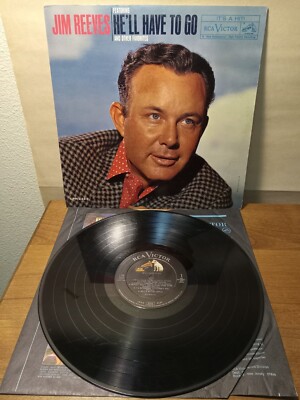
The song proved that country music may be successful both domestically and internationally without compromising emotional integrity.
The universal themes of love, vulnerability, and heartbreak made it appealing to listeners who would not have considered themselves country fans.
The song became a standard on jukeboxes across the United States after being adopted by radio stations of all styles.
Word-of-mouth and repeated listening, rather than publicity or controversy, were the main factors in its appeal. People came back to the song because it evoked a sincere emotion in them.
An Iconic Moment for the Nashville Sound
The Nashville Sound became a dominant force in country music thanks in large part to “He’ll Have to Go.”
The divide between popular pop and traditional country music was lessened thanks to this more polished and fluid style. It made it possible for artists to maintain emotional depth while reaching larger audiences.
One of the most significant individuals connected to this movement was Jim Reeves.
His persona, voice, and musical preferences symbolized a new breed of country music performer—one who could play on global stages, appeal to a wide range of fans, and still stay loyal to the emotional essence of the genre.
Reeves went from being a well-liked country singer to an international sensation as a result of the song’s success. He traveled much, playing in South Africa, Europe, and other places, introducing country music to those who had never heard of it before.
He became one of the first country musicians that crowds genuinely loved in many locations.
The impact of “He’ll Have to Go” grew long after it was taken off the charts. This recording grew stronger with every decade that went by, in contrast to many hit songs that lose their impact over time.
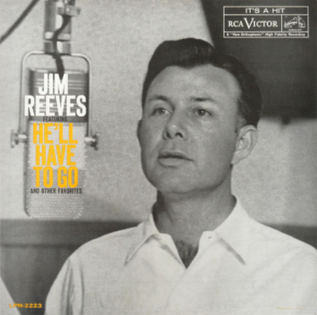
Its ageless arrangement, emotional honesty, and simplicity made it relevant for all ages. The music was part of the human experience, not a particular time period.
Through radio, jukeboxes, and later movies, TV shows, and digital media, listeners kept finding the music.
In contrast to louder musical trends, its subdued intensity offered something uncommon: closeness. Long after it was first released, the song’s emotional impact persisted because it seemed less like a performance and more like a personal confession.
“He’ll Have to Go” is frequently cited by music historians as a prime illustration of how moderation may be more effective than excess.
There were no intricate lyrics or dramatic crescendos, simply an honest telling of a straightforward tale. Generations of artists were impacted by that strategy and discovered that often the most honest music is also the most effective.
The number of musicians that decided to record their own renditions of the song is another indication of its influence.
Famous artists like Charlie Rich, Ry Cooder, Elvis Presley, and others provided renditions that were a reflection of their unique styles. Nevertheless, Jim Reeves’ original album continued to be the gold standard among these esteemed performers.
Although powerful, Elvis Presley’s cover more closely resembled his dramatic vocal style. Ry Cooder tackled it with a sensibility influenced by the blues.
The song’s emotional elements were emphasized in each rendition, but none took the place of Reeves’ performance’s subdued authority.
This lasting regard is a testament to the original recording. Not only was it technically superb, but it also conveyed a certain emotional sincerity that was hard to duplicate.
There wasn’t much space for improvement because of the harmony that Reeves’ voice, delivery, and timing produced.
“He’ll Have to Go” started to appear frequently in popular culture outside of recorded covers. It frequently served to highlight introspective, heartbreaking, or emotionally transitional periods in movies, TV series, and documentaries.
The song’s position in the cultural memory was strengthened by each occurrence, which exposed it to new audiences.
Jim Reeves as a Country Music Ambassador Worldwide
Jim Reeves’ career quickly spread outside of the US once “He’ll Have to Go” became popular. He was among the first country musicians to become well-known throughout the world.
He appealed to people who were not familiar with conventional country music because of his polished appearance, fluid voice, and emotional sensitivity.
Reeves performed at packed houses and made appearances on worldwide television shows during his lengthy tour of Europe, Africa, and other continents.
He became well-known in nations like South Africa and the UK, contributing to the globalization of country music.
Reeves stood out for his flexibility without sacrificing authenticity. He didn’t change his sound to appeal to fans in other countries.
Rather, he believed that emotional truth would be universal, and it was. Vulnerability, love, and longing needed no translation.
A Sad and Unexpected Death
Jim Reeves’ life was cruelly cut short despite his increasing success. Reeves passed away at the age of 40 in a plane crash close to Brentwood, Tennessee, on July 31, 1964. The plane ran into bad weather while he was flying it himself.
The music industry was rocked by the news of his passing. The loss of an artist who still had a lot to offer was lamented by fans, other musicians, and business experts.
His death left a gap in both country music and popular music in general.
Reeves was at the pinnacle of his creative development when he passed away. He was still developing as a creative force and had already changed the genre.
Many people think that if he had lived longer, his impact would have grown even more, potentially changing country music once more.
Posthumous Honors and Enduring Deference
Jim Reeves’ reputation grew even further in the years after his passing. His recordings continued to be well-liked, and more people began to recognize his impact.
In recognition of both his creative accomplishments and his contribution to the growth of country music, he was posthumously admitted into the Country Music Hall of Fame.
In addition, Reeves was honored with other lifetime achievement awards, demonstrating the enduring significance of his contributions. His songs were still played on adult contemporary and country radio stations, and his recordings kept selling.
Crucially, nostalgia was not the only factor used to sustain his legacy. His music continued to have significance for younger fans and musicians.
“He’ll Have to Go” served as a gateway to vintage country music for many listeners, allowing them to gain a greater understanding of the history of the genre.
Impact on Contemporary Pop and Country Music Artists
Many contemporary artists have been influenced by Jim Reeves and “He’ll Have to Go.” Performers like Keith Urban, Taylor Swift, Shania Twain, and others profited from the path Reeves helped pave, which allowed country music to transition into mainstream pop without sacrificing emotional nuance.
Reeves contributed to the popularization of the Nashville Sound, which served as the basis for modern country-pop fusion. Thanks in part to pioneers like Reeves, the genre now standardizes smooth production, emotional clarity, and broad appeal.
Additionally, his influence transcends genre borders. Reeves’ passionate delivery and command of the voice have been hailed as influence by jazz, folk, and even soul musicians.
His work showed that emotional integrity and technical mastery are complementary rather than antagonistic.
The Significance of “He’ll Have to Go”
“He’ll Have to Go” is still regarded as one of the most cherished country music songs over 60 years after it was first released. Its universality is what keeps it relevant today.
The song discusses the emotional ambiguity that almost everyone encounters at some point in their lives.
It is more powerful because of what it does not say than by what it says. Listeners are able to project their own feelings into the song because of the pauses, the gentleness, and the restraint. Its enduring significance stems from this wide emotional space.
“He’ll Have to Go” serves as a reminder that calm sincerity may endure in a time of rapidly evolving trends and nonstop noise. It demonstrates that music merely needs to be sincere in order to be heard.
An Enduring Legacy
Jim Reeves demonstrated the elegance, emotion, and universality of country music. He made a significant contribution to the genre’s expansion and redefining with “He’ll Have to Go,” leaving a lasting mark on music history.
Even though he passed away too soon, his voice is still heard today. The ideals he personified—grace, simplicity, and emotional truth—are carried forward each time the song is performed.
His compositions continue to serve as a monument to the timeless ability of music to bridge generations, time, and cultural divides.
Not only was “He’ll Have to Go” a hit song, but it was also a turning point in music history. And Jim Reeves’ legacy will endure as long as people are looking for authenticity and significance in music.