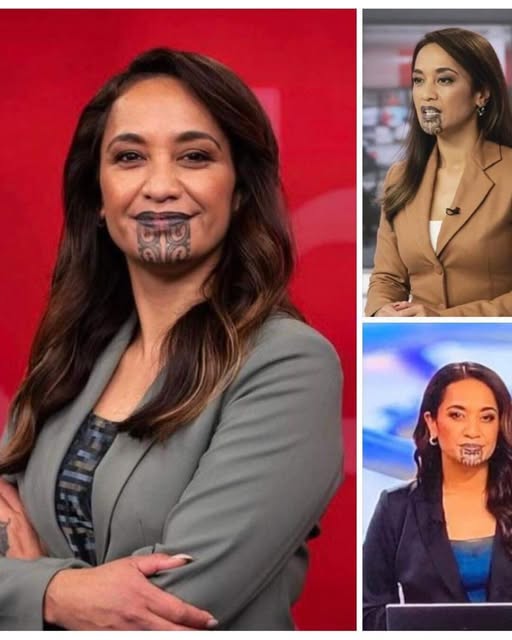
In a graceful response to a viewer’s troll remarks, a television host with a traditional Māori face tattoo reaffirmed her pride in her identity and cultural background.
Online discussions about facial tattoos are common. While some people believe that tattoos should only be applied to the body, others support their cultural significance. Oriini Kaipara, a 41-year-old TV presenter, made history when she started working as a newsreader for New Zealand’s Newshub. She was the first person to present a primetime TV news bulletin while wearing a moko kauae, a respected cultural symbol worn by Māori women.
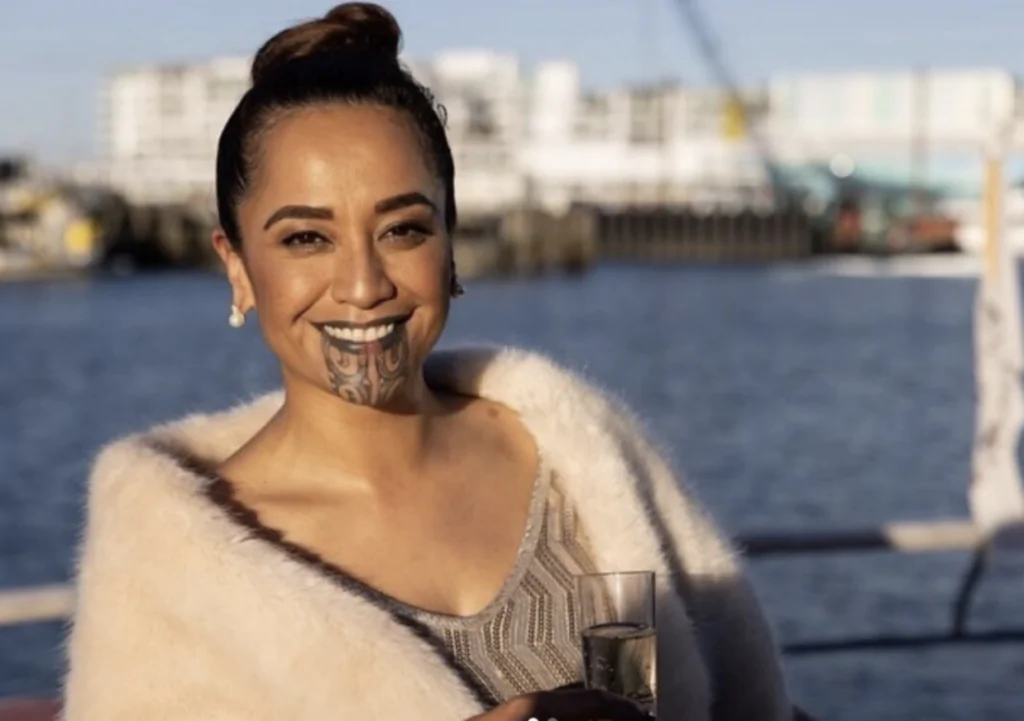
Moko kauae are significant symbols of heritage and identity for Māori, the indigenous Polynesian people of mainland New Zealand. These facial tattoos, which are typically applied to the lips and chins, honor a woman’s ancestry, status, and abilities while also representing her leadership in her community and familial ties.
But in the middle of the praise, a viewer named David sent Newshub an email expressing his displeasure with Kaipara’s moko kauae.
According to the Daily Mail, he wrote, “We continue to object strongly to you using a Māori newsreader with a moko which is offensive and aggressive looking.” “An ugly appearance. Additionally, she speaks in a Māori language that we do not comprehend. Put an end to it now.
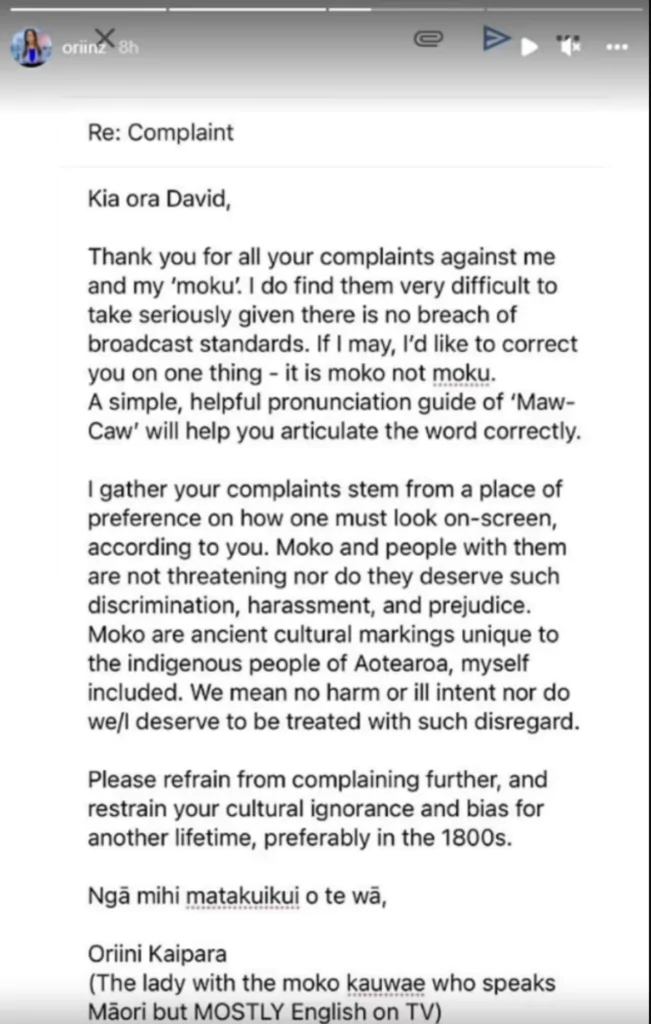
Kaipara bravely confronted the matter head-on, sharing screenshots of the messages on her Instagram story and reacting with dignity and grace despite David’s derogatory comments.
“I had enough today. I answered. Never do I do that. She posted a screenshot of David’s message to an Instagram story along with the caption, “I broke my own code and hit the send button.”

Additionally, Kaipara shared her email reply to David, stating that “given there is no breach of broadcast standards,” she was unable to take his complaint seriously.
Additionally, since David had called her “moku,” she took care to correct his spelling of the word.
Kaipara went on in her email: “I assume that your grievances are based on your personal preferences for how one should appear on screen. Moko and those who accompany them are neither dangerous nor deserving of this kind of prejudice, harassment, or discrimination.
“They don’t deserve to be treated with such disregard, and we mean no harm or ill intent,” she went on. “Please stop whining and hold back your prejudice and cultural ignorance for another lifetime, preferably in the 1800s.”
Kaipara quickly responded to David’s harsh criticism by saying that she typically receives positive comments and that nasty trolls are rare.
Shortly after responding to David’s complaint, Kaipara discussed the importance of having more Māori advocates in an interview with the New Zealand Herald, saying, “The fact that my existence triggers some people is testament to why we need more Māori advocates in key roles across every sector.”
Overall, Kaipara’s respectful response is a potent reminder of the value of cultural pride and perseverance in the face of hardship. She is also encouraging others to confront discriminatory attitudes and embrace their identities without apology.